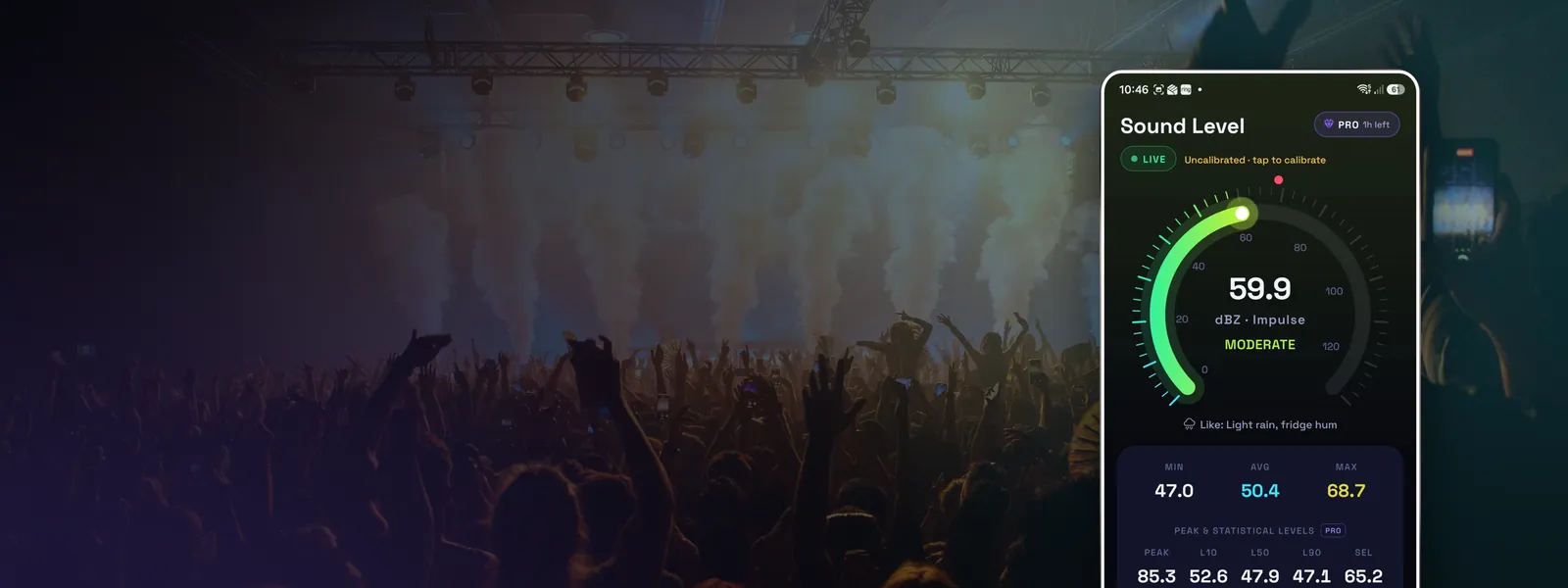
Live music is supposed to be loud. The problem is how loud: most gigs and clubs run at levels where your daily safe listening allowance is used up in minutes, not hours. Knowing the numbers lets you enjoy the night and still hear properly the next day.
Typical levels
| Setting | Typical average level |
|---|---|
| Pub with background music | 75 to 85 dB(A) |
| Acoustic or jazz gig | 85 to 95 dB(A) |
| Small rock or indie gig | 95 to 105 dB(A) |
| Nightclub dance floor | 95 to 105 dB(A) |
| Arena or stadium concert, mid-crowd | 100 to 110 dB(A) |
| Close to the speakers or front row | 105 to 115 dB(A) |
These are averages over a set (LAeq). Peaks are higher, and bass levels in dB(C) are often 10 dB or more above the A-weighted figure, which is why a club can feel physically loud in your chest.
How long is safe?
Using the widely accepted NIOSH guideline (85 dB(A) for 8 hours, with the safe time halving every 3 dB):
- At 94 dB(A): about 1 hour
- At 100 dB(A): about 15 minutes
- At 103 dB(A): under 8 minutes
- At 106 dB(A): under 4 minutes
- At 110 dB(A): around a minute and a half
A two-hour set at 100 dB(A) is around eight times the daily allowance. That's why ringing ears after a gig are so common. Ringing is a sign of temporary damage, and repeated often enough, some of it becomes permanent.
The World Health Organization's 2022 global standard for safe listening venues recommends that venues keep the average level at or below 100 dB(A) over any 15 minutes, monitor levels, and offer quiet zones and hearing protection. Not every venue follows it.
Where you stand matters
Sound drops with distance. Moving from right in front of the stacks to the middle of the room, or towards the sound desk, can cut 5 to 10 dB, which multiplies your safe time several times over. The sound engineer usually mixes from the desk, so it's often where the music sounds best too.
Avoid standing directly in front of speakers or next to subwoofers, and take breaks outside or in a quieter bar area during long nights.
Earplugs that don't ruin the music
Foam earplugs work but muffle everything, cutting high frequencies much more than bass. Musicians' earplugs (also called hi-fi or high-fidelity earplugs) use a filter to reduce sound more evenly across frequencies, so music sounds the same, just quieter. Off-the-shelf versions cost little more than a round of drinks; custom-moulded ones with interchangeable filters are worth it for regular gig-goers and musicians.
A typical reusable pair reduces levels by around 15 to 20 dB in real use. That turns 105 dB(A) into roughly 85 to 90 dB(A), where a long set becomes far less risky.
Check the venue yourself
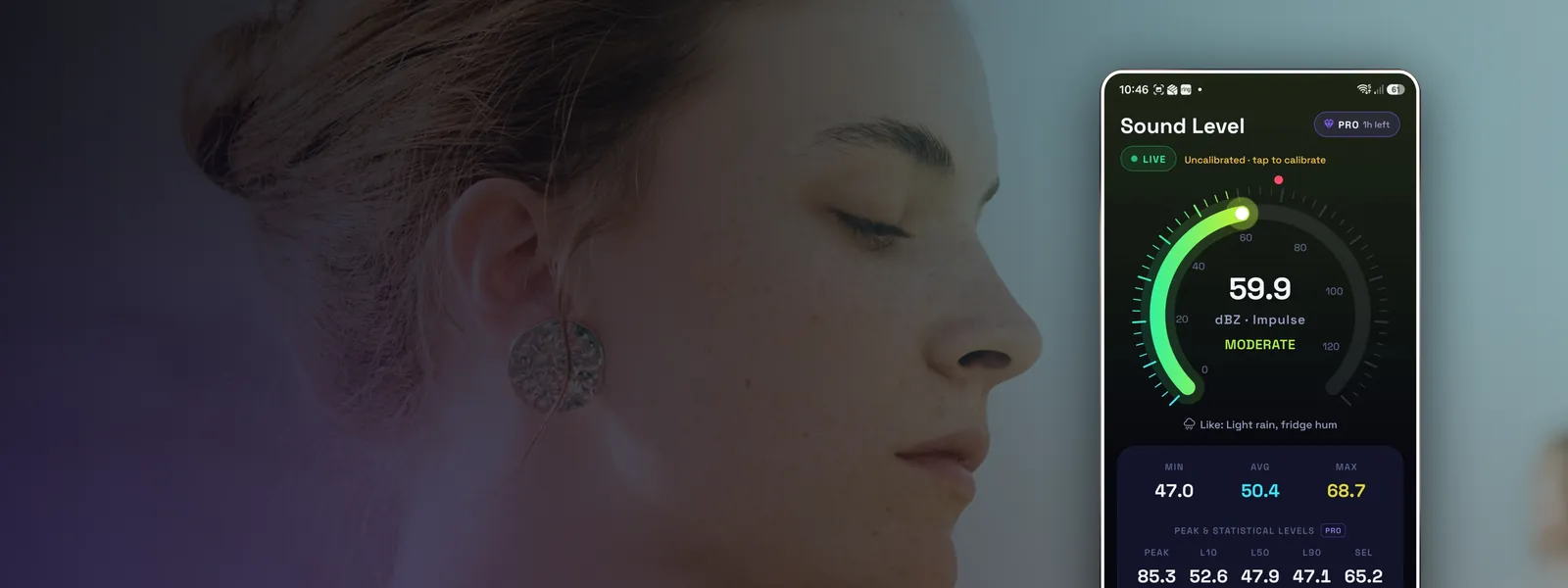
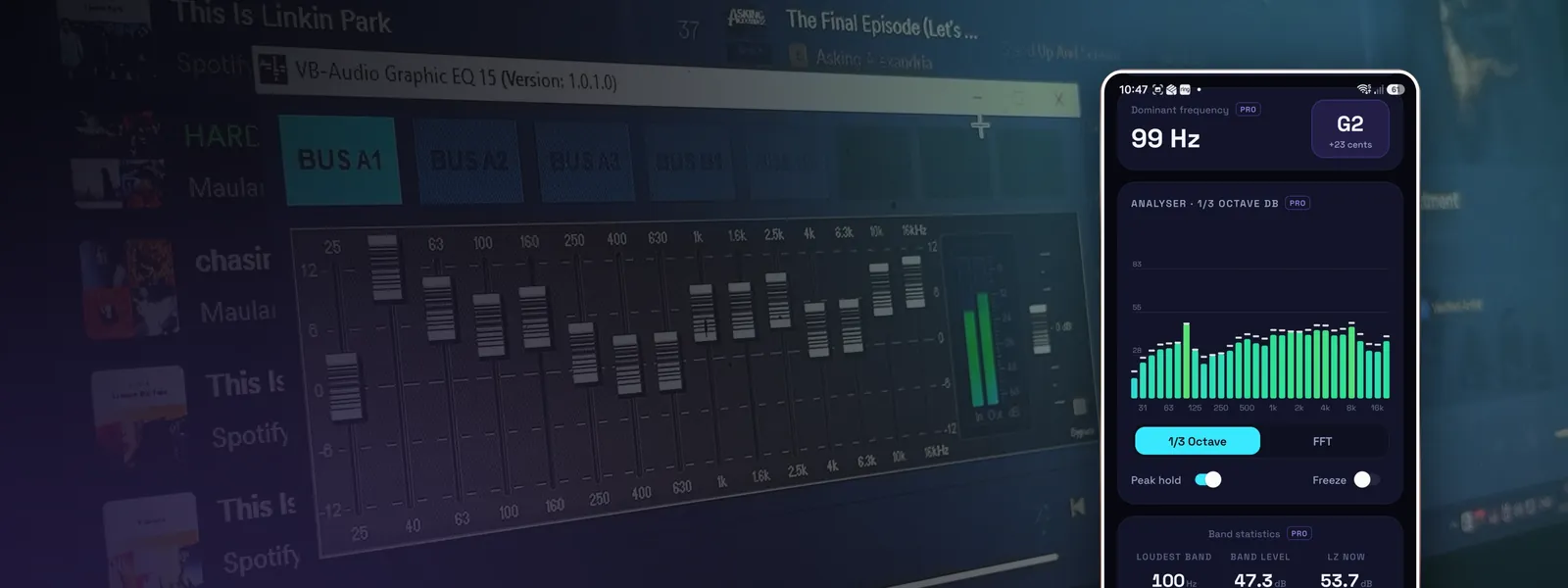
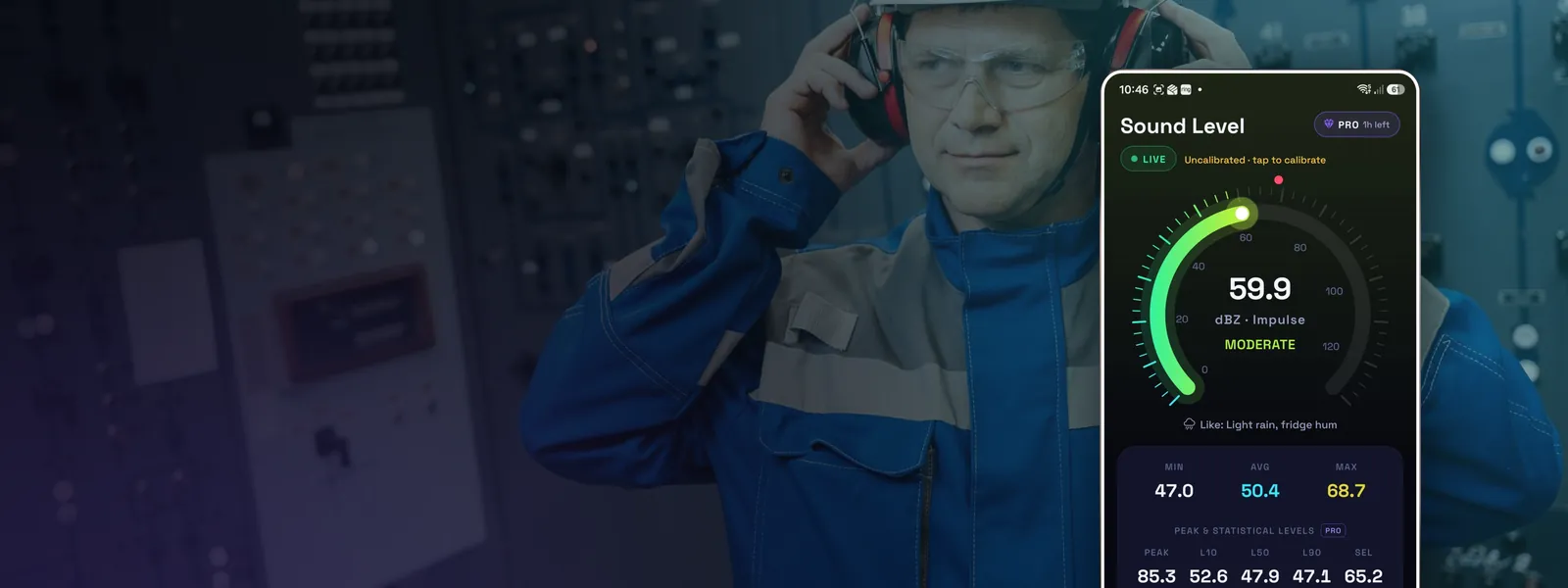
Bands, clubs and festivals vary hugely. Checking the level for a minute when you arrive tells you whether to bring the earplugs out straight away or stand further back. Hold your phone at head height, away from your body, and look at the average rather than the peak. Note that phone microphones can overload at the very loudest levels; a good app will warn you.
For musicians, DJs and staff
If you play, mix or work in loud venues, your exposure adds up much faster than the audience's. In the UK, the Control of Noise at Work Regulations apply to employers in music and entertainment, and the HSE publishes "Sound Advice" guidance for the sector. See workplace noise limits for the numbers.