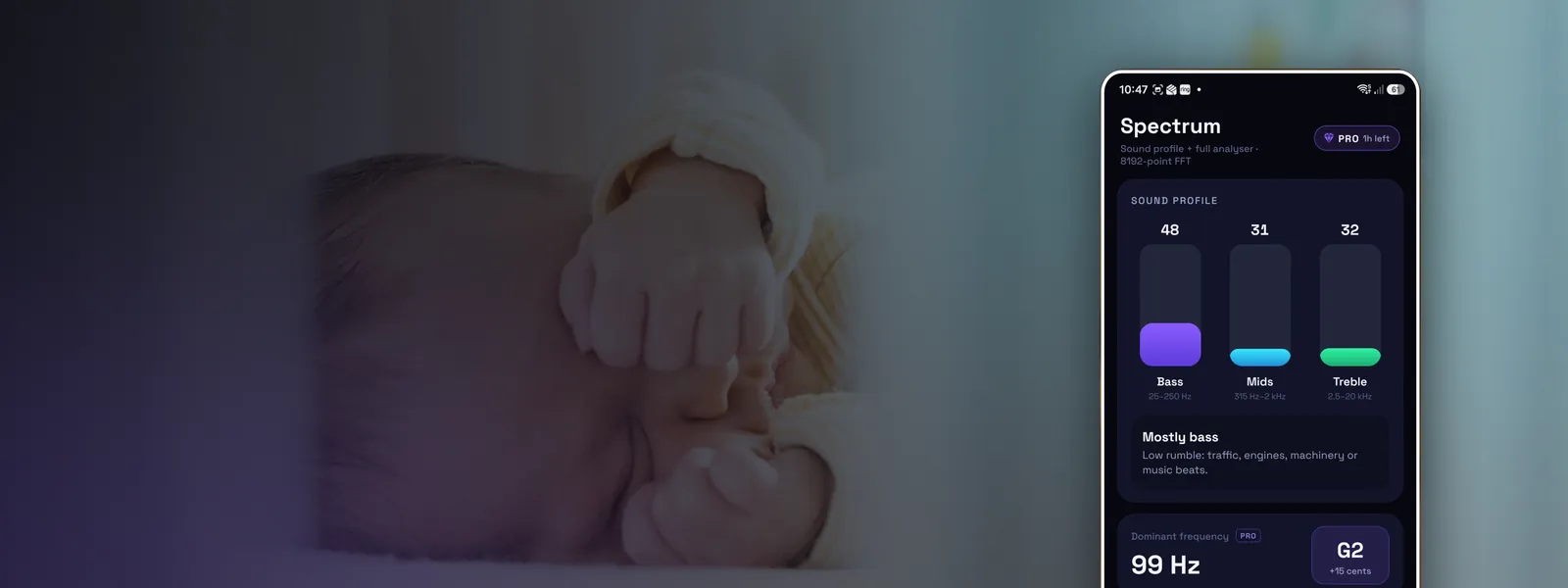
White noise machines and sound apps can help some babies settle. But many are capable of being far louder than they need to be, and babies can't move away or turn the volume down. The good news: checking yours takes a couple of minutes.
What the research found
In 2014, researchers in Toronto tested 14 infant sleep machines and published the results in the journal Pediatrics. They measured each one at maximum volume at three distances: 30 cm (roughly where a machine attached to a cot rail would be), 100 cm and 200 cm.
- At 30 cm, every one of the 14 machines was louder than 50 dB(A), the level recommended for hospital nurseries.
- Three of them exceeded 85 dB(A) at that distance, the level at which adult workers would need to start taking precautions over an 8-hour day.
- Moving the machine further away made a big difference.
The authors pointed out that babies' ear canals are smaller than adults', which can make sound at the eardrum louder, and that machines are often left running all night.
What volume is safe?
There's no single official limit for home use, but the guidance you'll see from paediatric researchers and hearing experts points the same way:
- Aim for about 50 dB(A) or less at your baby's head. That's around the level of a quiet conversation or a fridge hum, and in line with hospital nursery recommendations.
- Place the machine as far from the cot as practical, and never inside the cot or on the rail.
- Use the lowest volume that works. If it's masking a noisy street or a sibling, you may need a little more, but rarely anything like maximum.
- Consider a timer so it turns off once your baby is asleep, if that works for your family.
For context, 50 dB(A) is not quiet. A silent bedroom at night is typically 25 to 35 dB(A). White noise doesn't have to be loud to mask sudden sounds; it just needs to be steady.
How to check your machine
- Set it up as you normally would: same position, same volume, door closed.
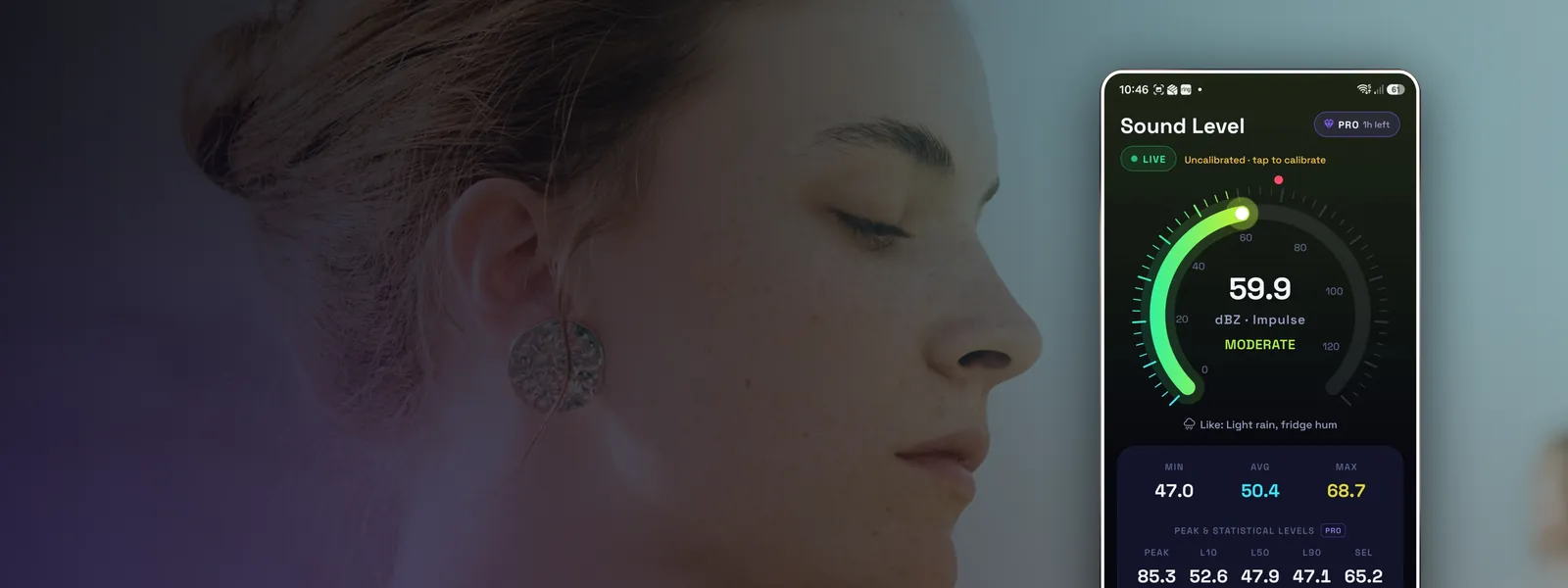
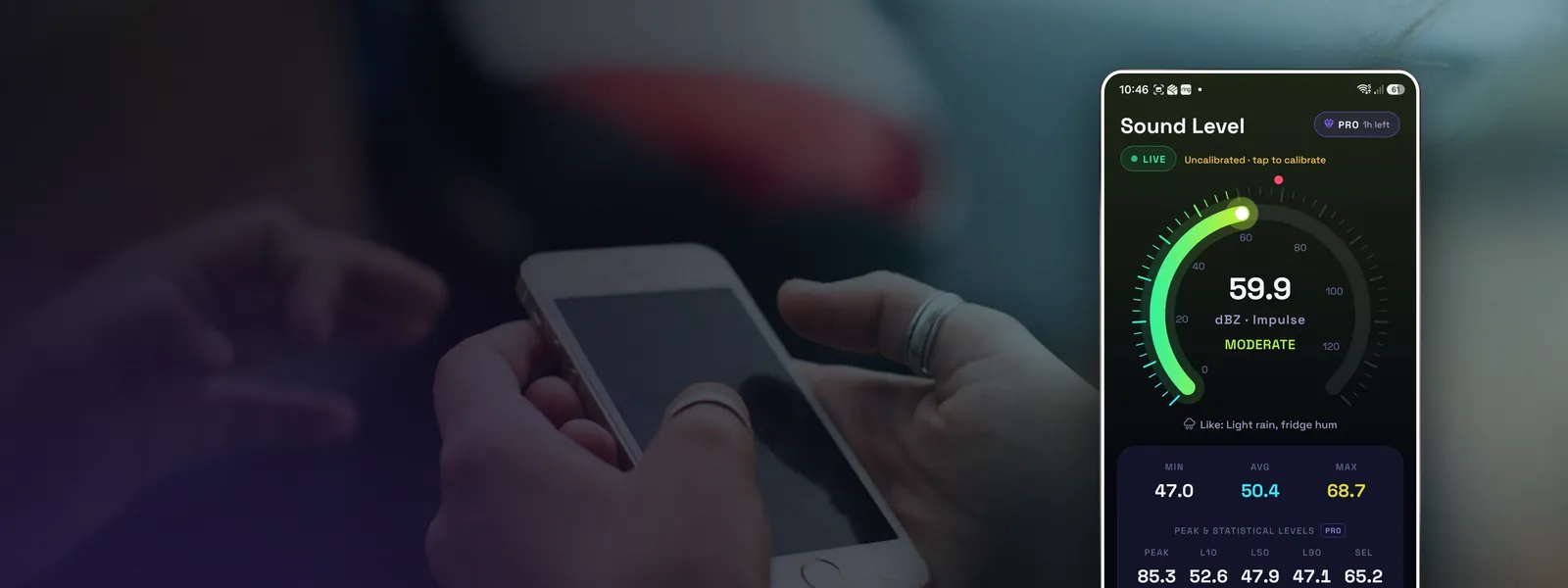
- Put your phone where your baby's head goes, screen up, microphone end pointing towards the machine. Take your baby out of the room first.
- Measure in dB(A) for about 30 seconds and read the average (Leq).
- If it's over 50 dB(A), turn it down or move it further away and measure again. Moving it from 30 cm to 1 m away often drops the level by 8 to 10 dB.
- Check after any change: a new machine, a new app, a different speaker or a new room.
What about the rest of the room?
A nursery doesn't need to be silent. Ordinary household sounds are fine and many babies sleep through them. The things worth checking are the steady sounds that run for hours: white noise machines, humidifiers, fans and air purifiers, plus loud baby monitors on the parent's side.
It's also worth thinking about your own bedroom. If your baby sleeps in with you, a white noise machine set for you may be much louder at their cot. The same 50 dB(A) target applies. Our guide to bedroom noise levels for sleep has more.
This is general information, not medical advice. If you have concerns about your baby's hearing or sleep, talk to your health visitor, GP or paediatrician.